Ojas Naturals
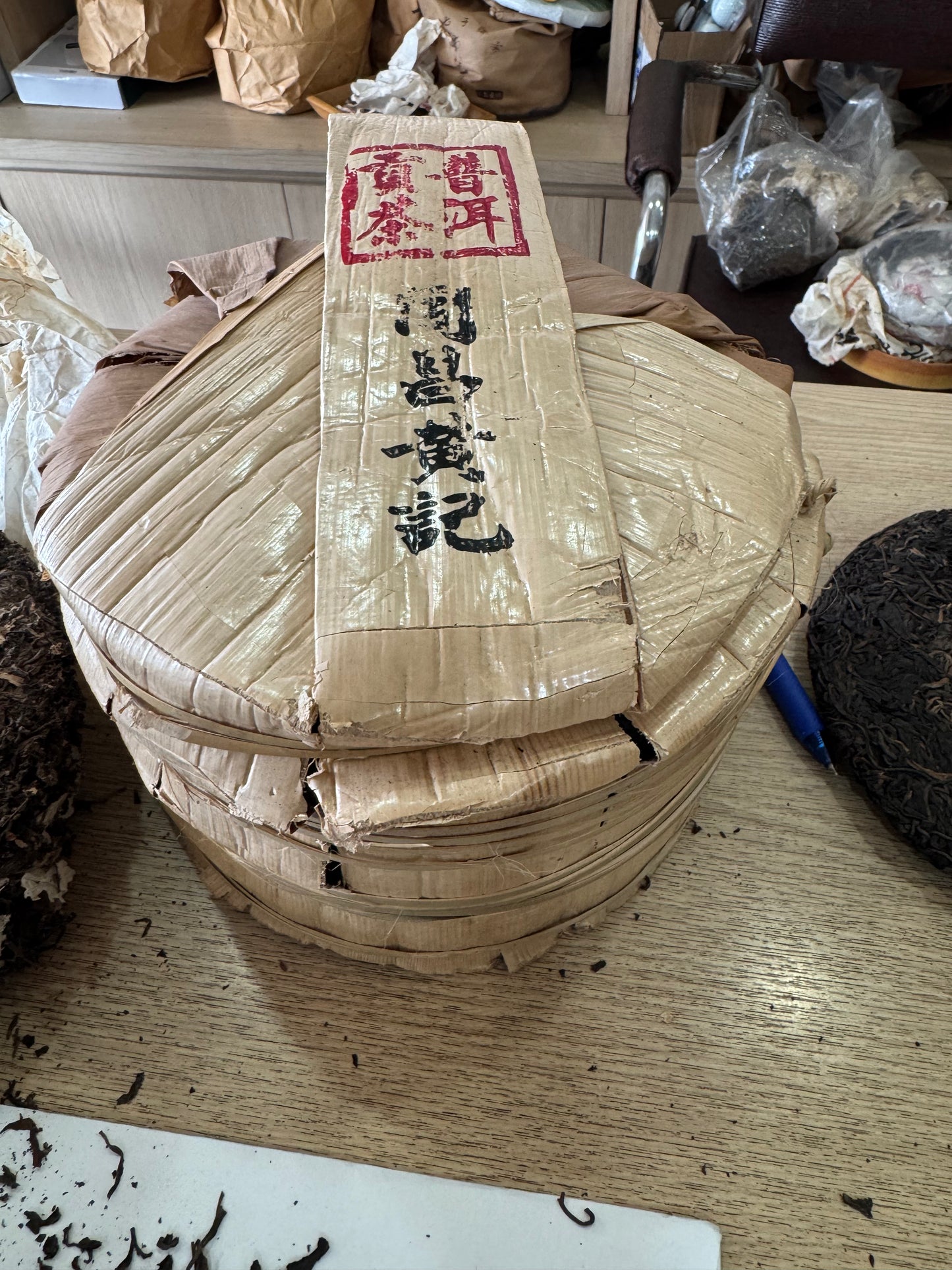
1990 Sheng Pu’erh - Yiwu Tong Chang Huang Ji | Aged Raw Pu’erh | Sample- 30 grams
1990 Sheng Pu’erh - Yiwu Tong Chang Huang Ji | Aged Raw Pu’erh | Sample- 30 grams
Couldn't load pickup availability
Another beautiful example of an aged Sheng Pu’erh from the famed Yiwu tea mountains of Yunnan, China.
Like its older 1976 counterpart, this tea has quite a history. Originally stored in Hong Kong before making its way to Taichung, Taiwan, where it has continued its slow transformation over the decades.
This tea is attributed to Tong Chang Huang Ji (同昌黃記), a historic tea house associated with Yiwu whose origins are traditionally traced to 1869, during the Qing Dynasty.
While sharing many of the qualities of the older 1976 Sheng, this tea has a character all its own. The liquor is more golden, the flavors brighter and more herbal, with that distinctive camphor quality often associated with well-aged Yiwu Sheng Pu’erh. The Cha Qi has a wonderful rising, energizing quality that continues to unfold long after drinking.
Aroma, Flavor & Character
-
Aroma: Chinese medicinal herbs, aged wood, camphor, earthy undertones, and subtle fruity notes.
-
Flavor: Rich medicinal herbal notes with hints of ginseng, dried fruits, and a deep, grounding earthiness, complemented by a distinctive cooling camphor quality.
-
Liquor: Beautiful golden amber, noticeably lighter than the deep chestnut tones of the 1976 Sheng.
-
Mouthfeel: Smooth, rounded, and full-bodied, with a wonderful depth that develops over multiple infusions.
-
Finish: A strong, lingering sweetness with a pronounced throat resonance, known as Hou Yun (喉韻). The camphor character adds a subtle cooling sensation that lingers in the throat.
-
Cha Qi (茶氣): Profound, sustaining, and rising. An energizing quality that builds gradually throughout the tea session and lingers long afterward.
A Rare Tea Experience
This is another gem I was fortunate enough to discover during my travels through Taiwan.
What makes this tea especially interesting is the opportunity to experience it alongside the 1976 Sheng from the same historic tea house. Both share a similar history of early Hong Kong storage followed by decades of aging in Taiwan, yet their characters are remarkably different.
The 1976 Sheng has a deeper, darker, more settled quality, with aged wood, camphor, and incense notes. The 1990s Sheng is brighter, more herbal and fruity, with a lively camphor character and a rising energy that feels both grounding and uplifting.
Drinking these two teas side by side offers a wonderful opportunity to experience how Sheng Pu’erh transforms over time. The changes in color, aroma, flavor, and Cha Qi are fascinating.
For me, this is one of the great joys of drinking aged Pu’erh. It is not simply about flavor, but about the experience of the tea itself and how it unfolds within us.
Another remarkable tea with profound Cha Qi and a beautiful, lasting presence.
Available in limited sample quantities